Property search
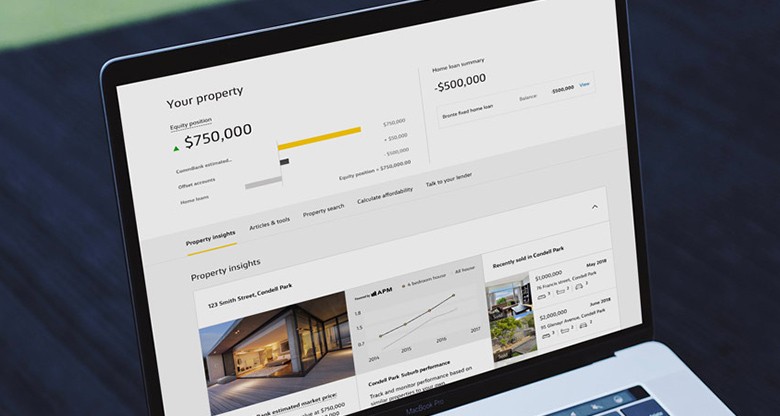
A trusted, bank-grade property estimate + suburb context in one simple place
Product Design
Native Experience
Role
Product Designer
Timeline
16 weeks
team
4 Enginners, 1 PM, 1PO, me
platform
Web

The Real Problem
Customers weren’t struggling to find property info — they were struggling to trust it enough to act
Home buyers were caught between uncertainty and urgency:
Underquoting + price discrepancies made listings feel unreliable, wasting time and eroding trust.
FOMO pushed people to rush decisions and risk overpaying.
Analysis paralysis forced customers to piece together insights across multiple sites, plugins, and spreadsheets just to feel confident.
The business problem wasn’t traffic — it was what we did with it
The previous experience wasn’t delivering strong lead conversion, and CommBank wasn’t fully leveraging high-intent behaviour for:
smarter personalisation and retargeting
clearer pathways into lending journeys
consistent property data usage across squads/crews (e.g., HomeHub, online applications, MyProperty)
Finding the Fix
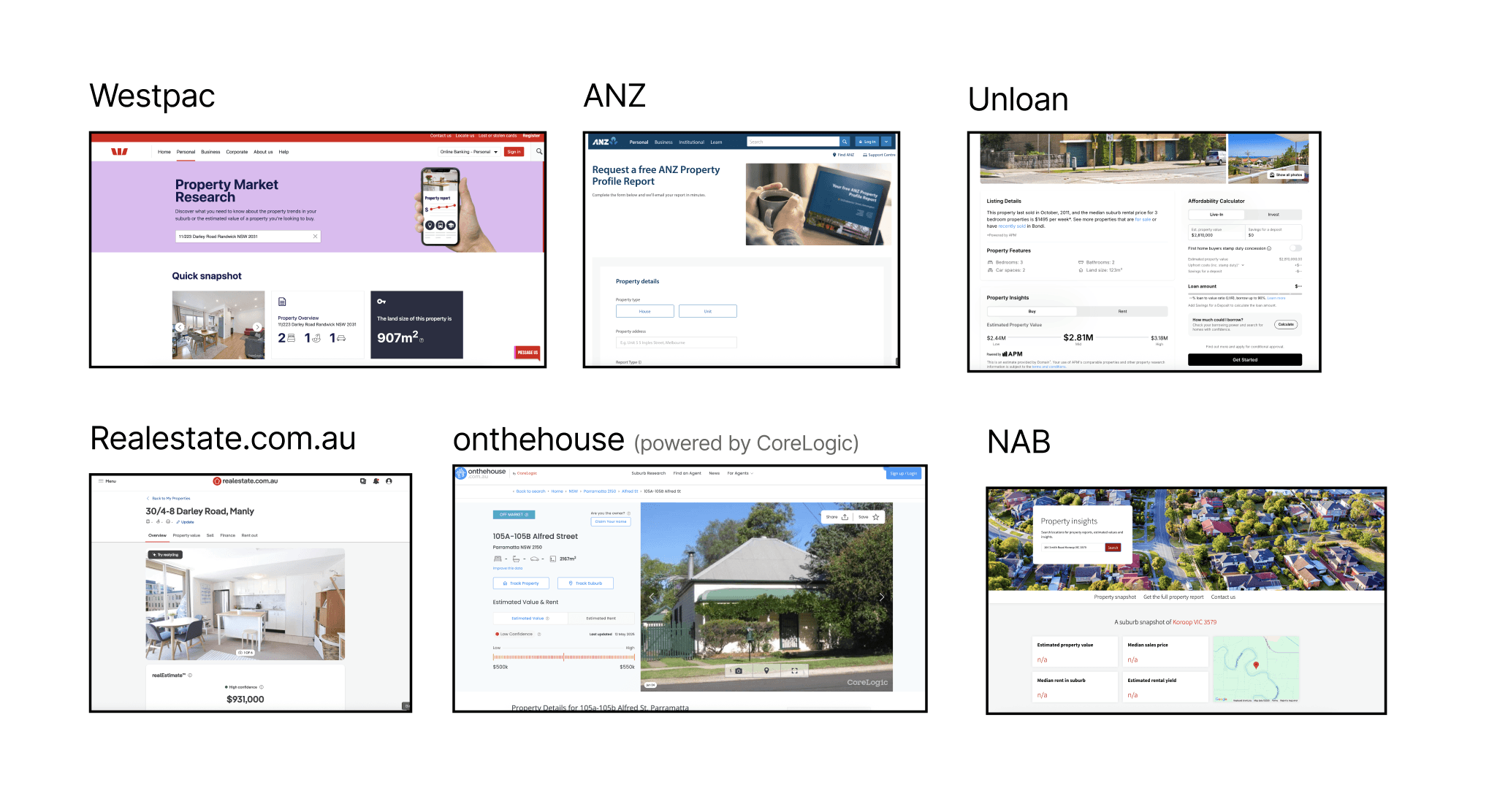
We didn’t start with UI — we started by testing the current state
Before jumping into solutions, we ran user testing on the existing experience to understand:
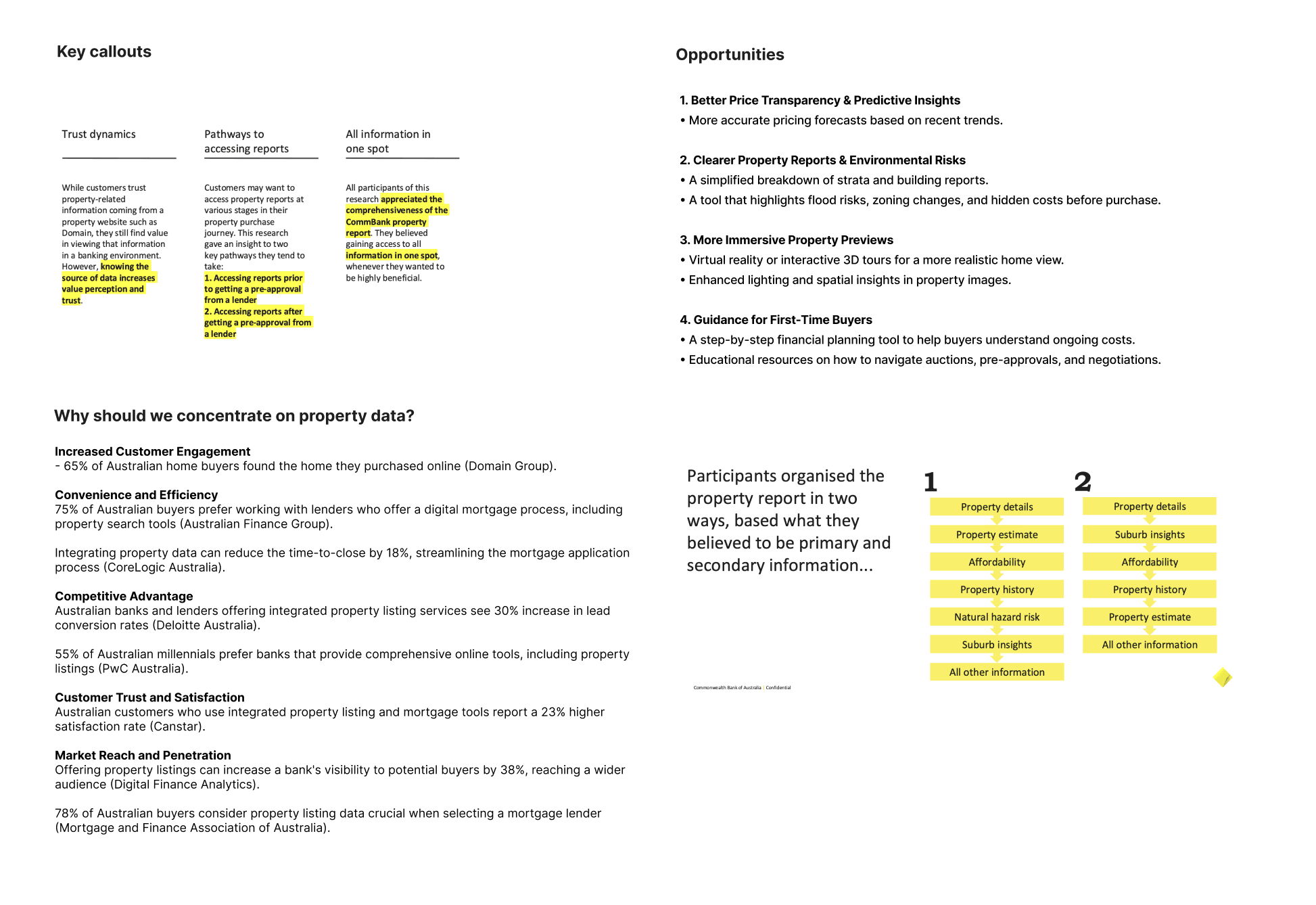
Trust dynamics: customers trusted marketplace info, but trust increased when it appeared in a credible bank environment—especially when the data source was explicit (which later informed our transparency approach).
Two report moments: customers wanted access both before and after pre-approval (explore vs decide).
“All in one spot” demand: participants valued comprehensiveness but needed information on-demand, not dumped at once.
Different confidence anchors: some prioritised property estimate first, others suburb insights first—a key input into how we structured and prioritised content.
The product strategy that emerged
Reduce uncertainty fast by pairing:
a trusted estimate (confidence anchor #1), and
suburb context (confidence anchor #2)
Then create natural pathways into next steps for those ready to progress.
What Actually Happened
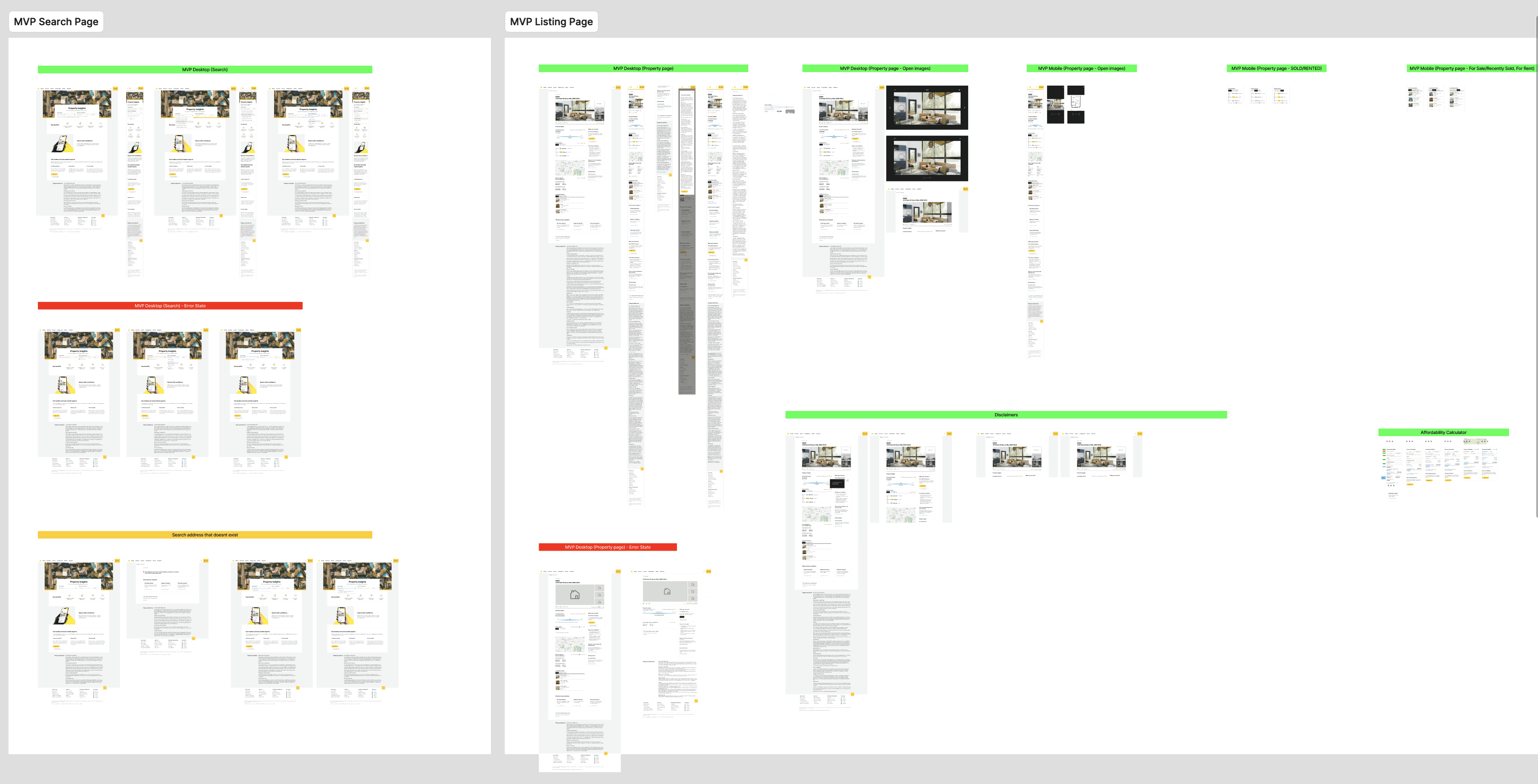
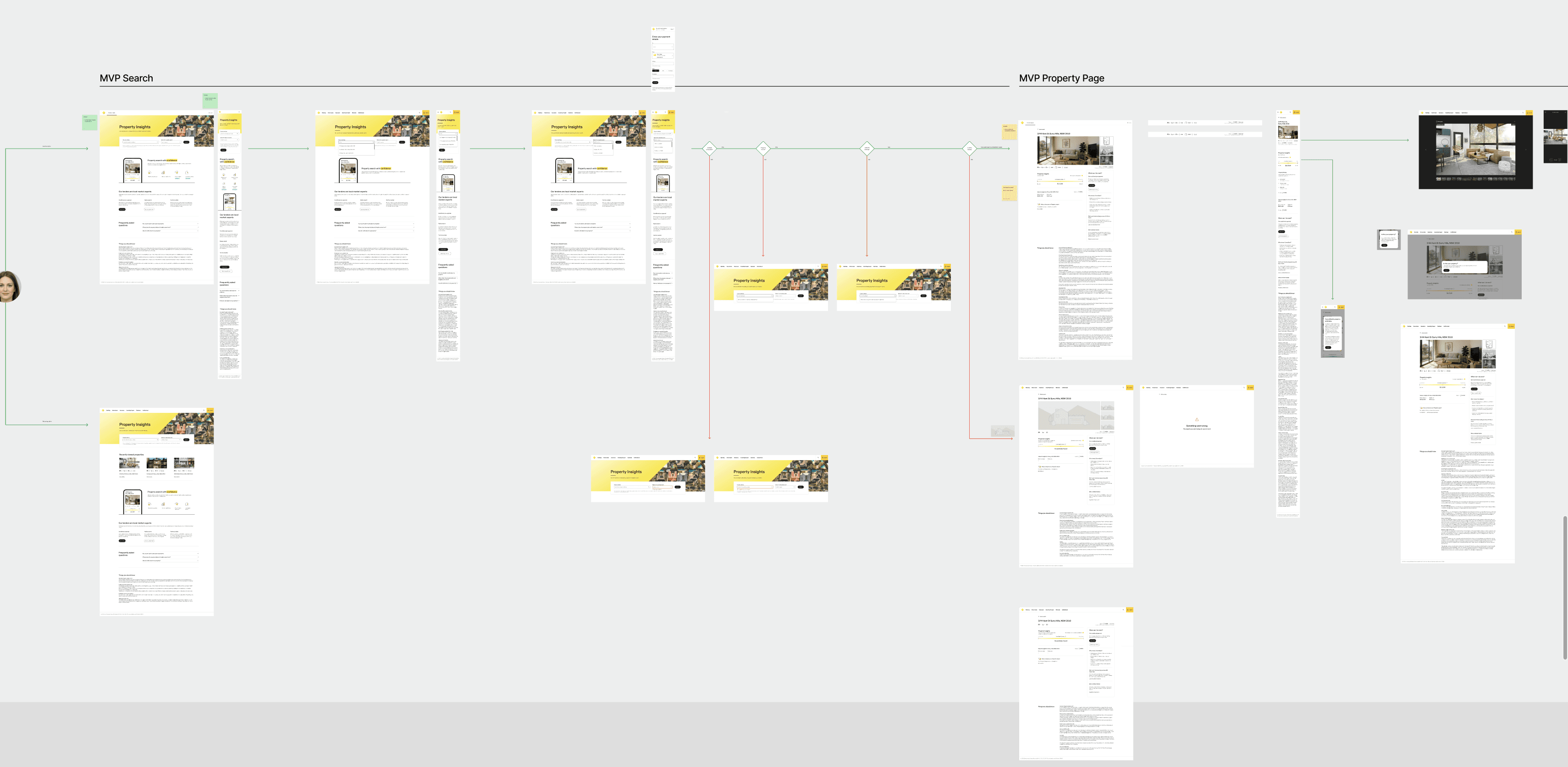
MVP: “Confidence in one place”
Property Insights brings together:
CommBank property estimate
Suburb insights
in a single, simple experience.
Customers enter an address and quickly get a snapshot of:
an estimated market value (framed clearly as an estimate, not a formal valuation)
suburb-level context that helps them interpret the number
transparent sourcing from Cotality
Designed to connect—not dead-end
For customers ready to take the next step, the experience provides pathways into lender support and onward journeys (e.g., booking an appointment; conditional pre-approval is promoted as part of the broader flow).
Built with runway
We launched with a focused MVP, while clearly signposting expansion areas like local market activity and sales/rental history (“coming soon”).
What Changed
For customers
Confidence in price expectations
A clear CommBank estimate, underpinned by Cotality data, helps set realistic expectations.Local context, not just a number
Suburb insights help customers understand how a property fits within its neighbourhood.Faster decision-making
Value + suburb context in one place reduces the need to cross-check multiple sources.Trust and transparency
The experience explicitly communicates sourcing and clarifies estimate limitations (“estimate only”, not a valuation).
For the business
Sustainability + cost: Supplier change reduced costs (~75%) and avoided ongoing overage penalties (from the previous experience).
Better ecosystem leverage: Property Insights becomes an entry point that can support other squads/crews needing property data.
Personalisation foundation: Address searches and behaviour patterns become journey signals (first home vs upgrader vs builder), enabling more relevant tools/content pathways across CommBank surfaces over time.
What I Had to Work With
A forced shutdown + a full rebuild (no reuse, no safety net)
We had to close the previous experience quickly due to supplier data-limit penalties and sustainability risk.
At the same time, we:
switched suppliers (driving ~75% cost reduction)
rebuilt on DHP / NetBank Next (moving off DP2), which meant no reusable assets and a completely new build.
“Going first” realities on NetBank Next
As one of the early products on NetBank Next, the team had to navigate constant change and uncertainty:
breaking upstream platform updates
production-blocking risks (e.g., security control gaps)
release derailments that required resilience and tight cross-functional ways of working
What I Learned
1) Trust is a product feature
Trust isn’t achieved by adding more data—it’s earned through:
transparency of source (Cotality)
clear framing of what an estimate is (and isn’t)
presenting context so customers can interpret the number
2) MVP success is about confidence per minute, not feature count
The highest leverage was reducing uncertainty quickly: estimate + suburb context delivered immediate value without overwhelming users.
3) Going first is a design challenge and a delivery challenge
Shipping early on NetBank Next wasn’t just “design and handover.” It required adaptability, close engineering partnership, and building resilient patterns as platform realities shifted.
4) The best products do two jobs
Property Insights helps customers decide—and it helps CommBank understand intent, enabling smarter personalisation across the ecosystem over time.