Target Wishlist
Enhancing collaborative shopping to drive engagement and purchase confidence
E-commerce
UX/UI Design
Role
Product Designer
Timeline
14 weeks
team
2 Enginners, 1 PM, me
platform
Web/App

The Real Problem
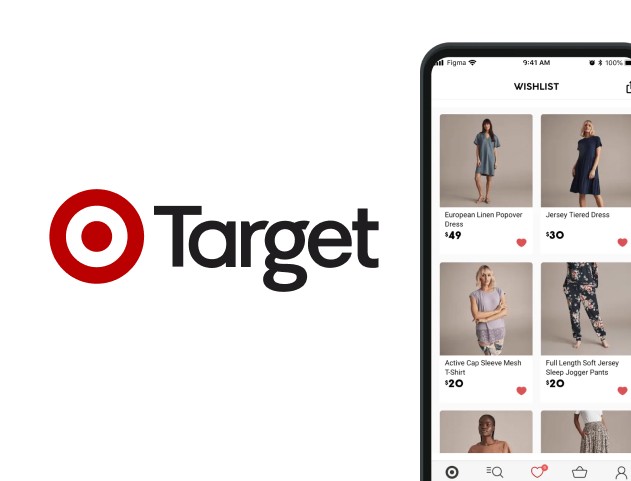
Target’s wishlist feature wasn’t broken—but it also wasn’t doing anything meaningful.
It functioned as a simple saving tool, not something that helped customers make better decisions, feel confident, or stay engaged. In a market where competitors were investing in richer, more interactive shopping experiences, Target’s offering felt flat and interchangeable.
The real issue wasn’t usability—it was lack of impact.
The wishlist existed, but it wasn’t influencing behaviour, conversion, or brand preference.
Finding the Fix
Through research, one behaviour stood out:
People rarely make purchase decisions alone—especially for higher-consideration items.
Users were:
Sending screenshots to friends
Asking partners for input
Trying to coordinate group decisions outside the product
This pointed to a clear opportunity:
The wishlist shouldn’t just store intent—it should support decision-making.
So I reframed the problem from:
“How might we improve wishlists?”
To:
“How might we make shopping more collaborative?”
What actually happened
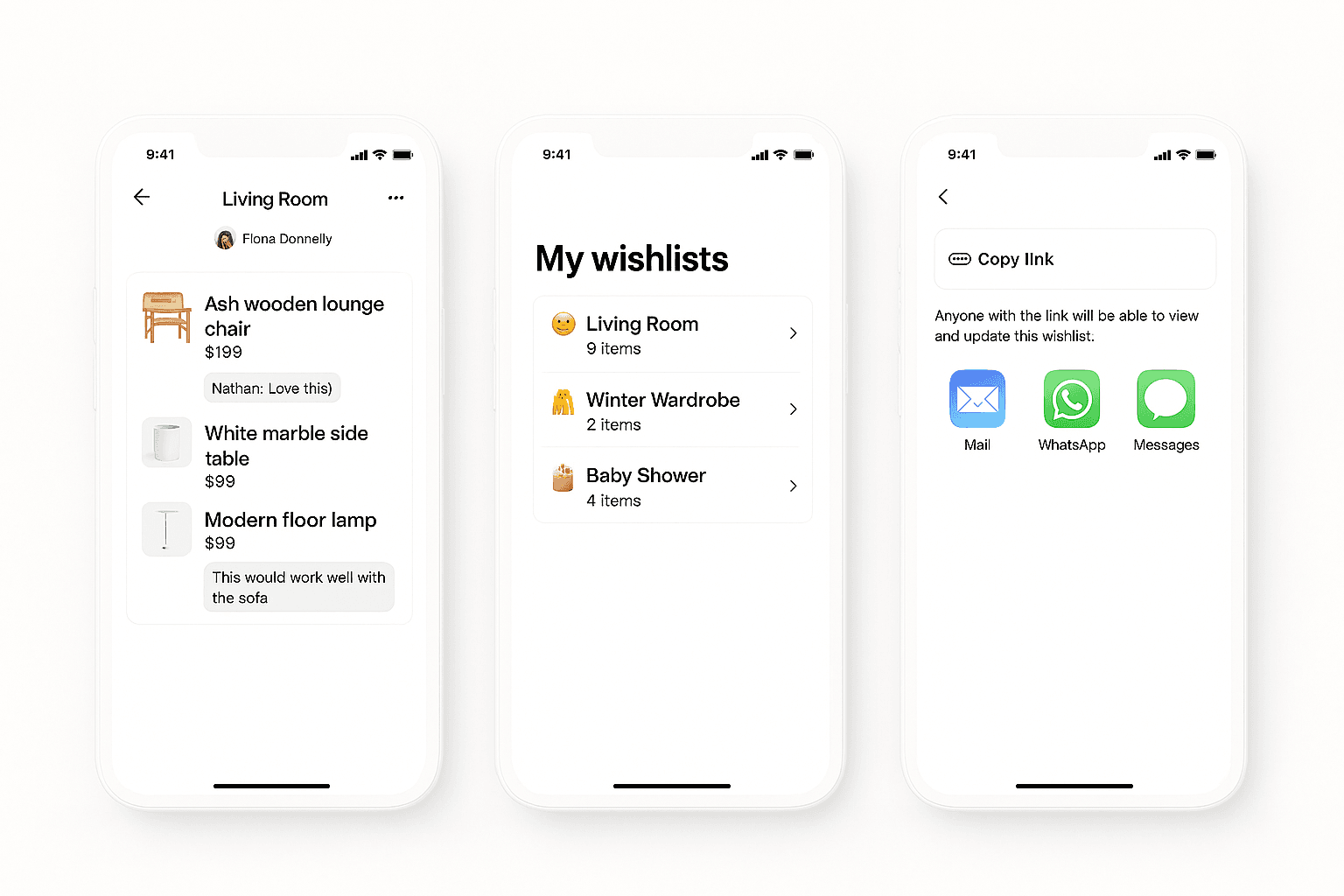
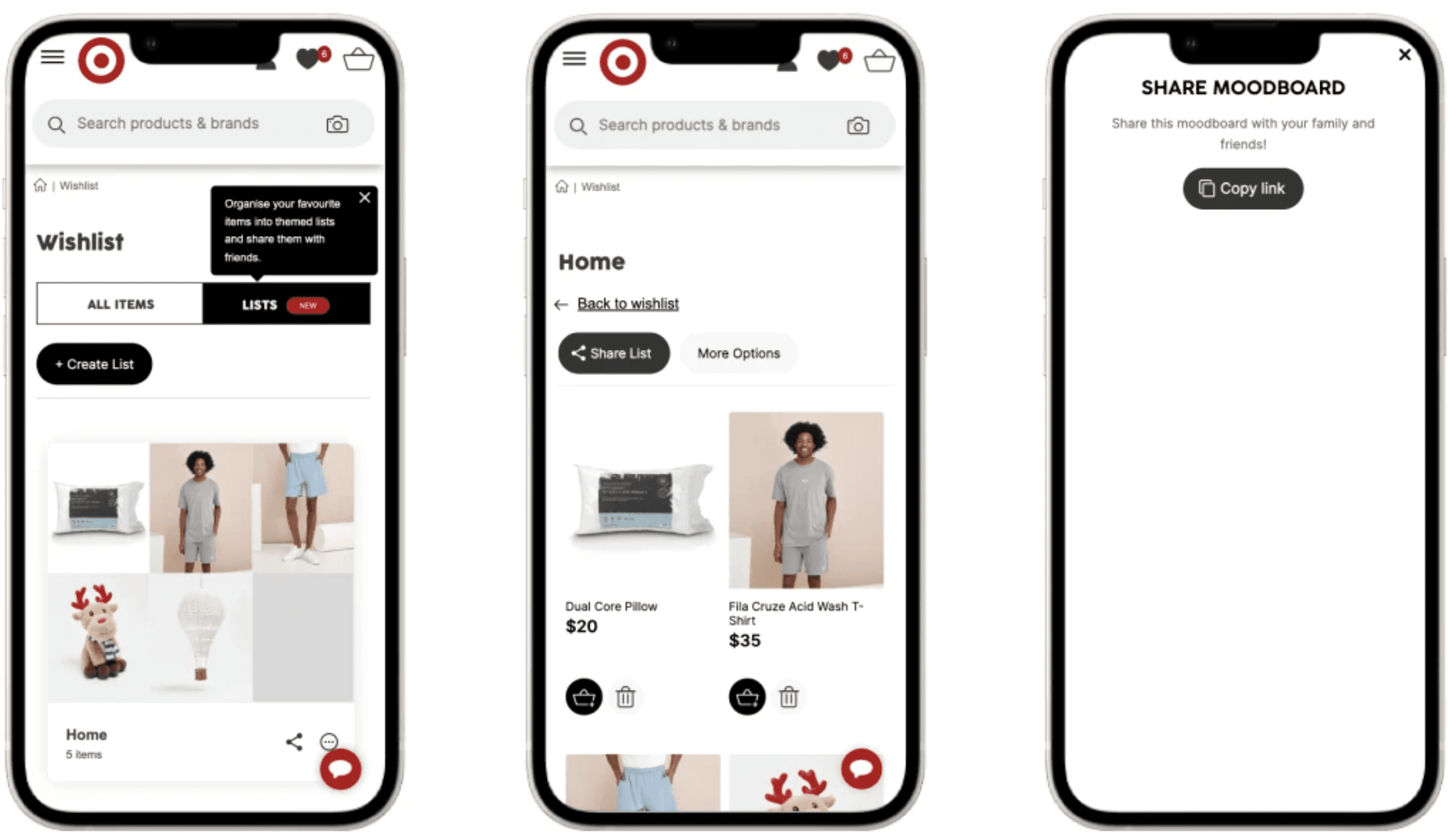
I designed a collaborative wishlist experience that turned a passive feature into an interactive decision-making tool.
Key changes included:
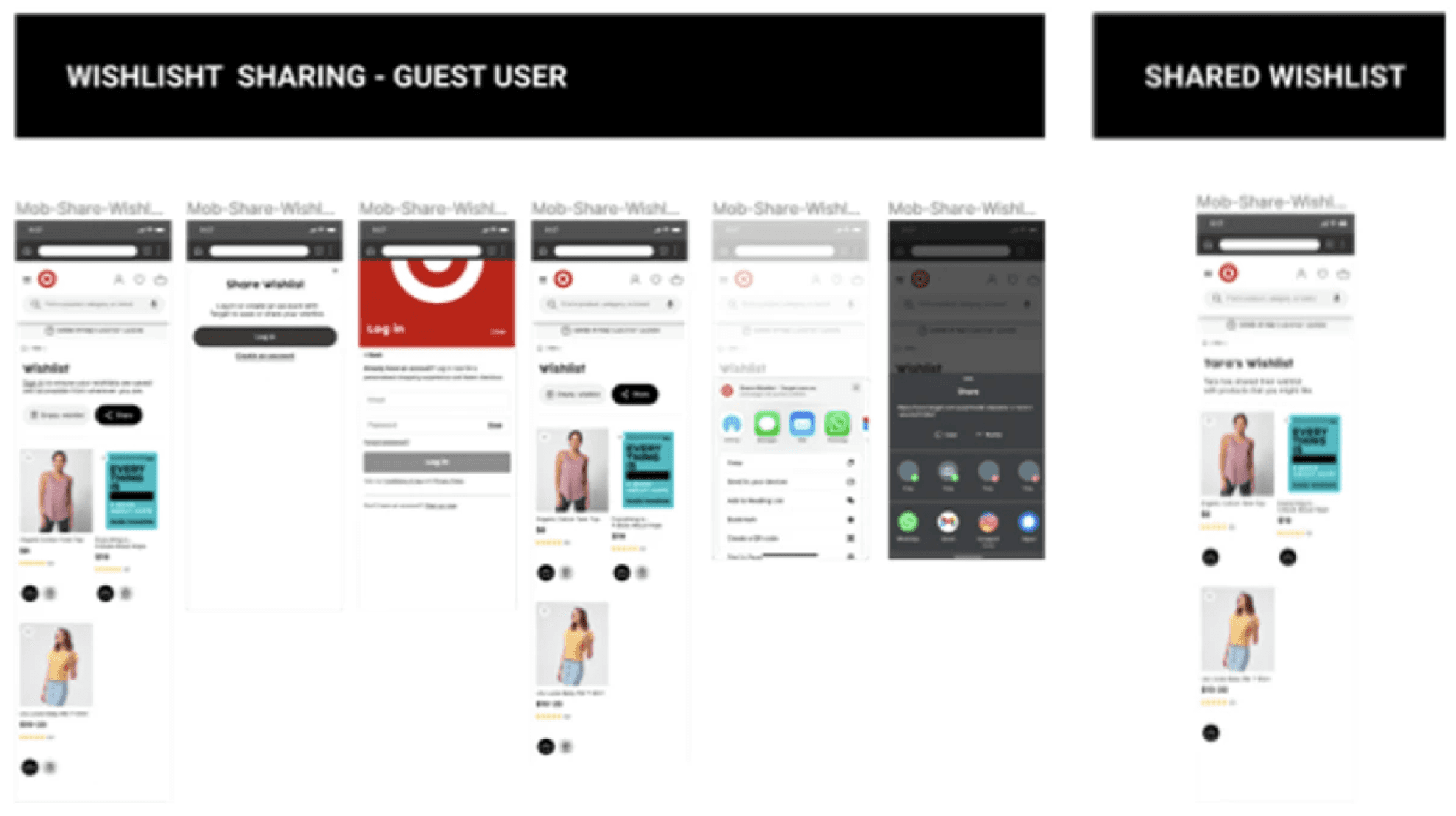
Shareable wishlists
Users could invite others to view and contribute, making it easy to shop together.Multiple lists
Supporting real-life contexts like home projects, events, or seasonal shopping.Personalisation
Names and emojis added emotional value and made lists feel meaningful.Item-level notes
Let users explain intent and guide others’ feedback.
The experience shifted from something users occasionally used to something they could actively engage with over time.
What Changed
The biggest shift wasn’t visual—it was behavioural.
We moved from:
Saving products → Discussing products
Individual browsing → Shared decision-making
One-off interactions → Ongoing engagement
This repositioned the wishlist from a supporting feature to a driver of engagement and confidence.
It also helped Target feel less like a transactional retailer and more like a platform that supports real-world shopping behaviours.
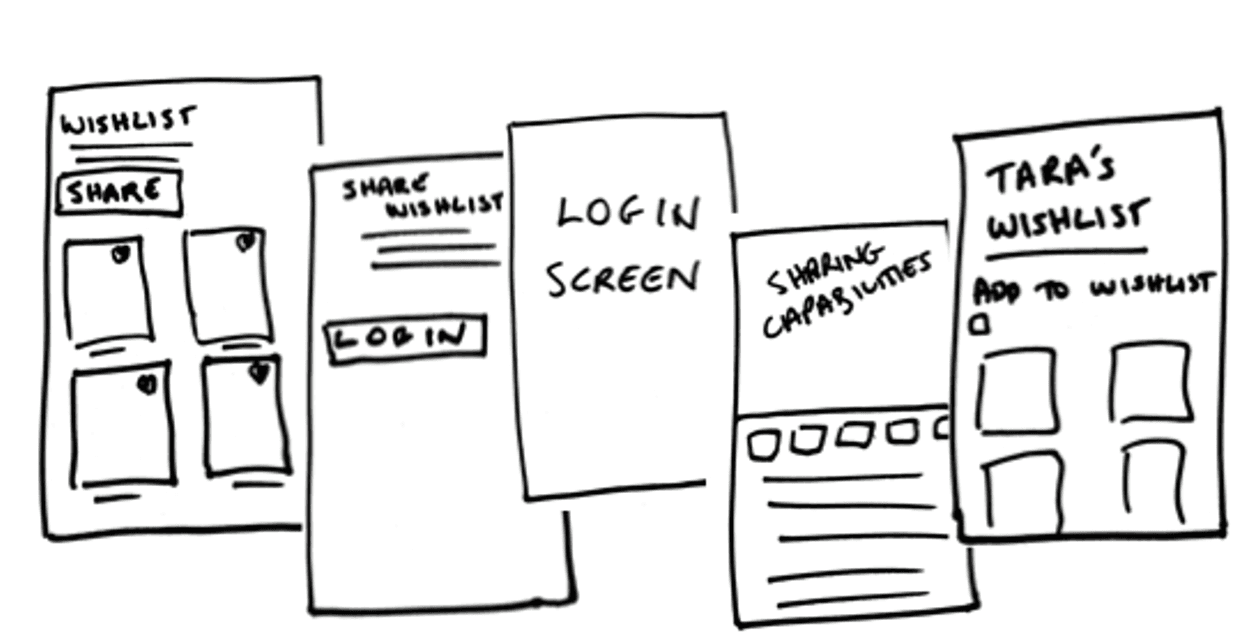
What I had to work with
Target was in the middle of a broader shift toward becoming a digital-first retailer, which created both urgency and opportunity.
From a product standpoint:
A basic wishlist feature already existed
Customers were already saving items—but not returning consistently
No collaborative or social functionality was present
The experience lacked personality and flexibility
From a research perspective, I had:
Access to user interviews and usability testing
Clear signals that customers were shopping beyond the app (screenshots, messaging apps, etc.)
What I'd Do Differently
Looking back, there are a few areas I’d push further:
Validate impact with stronger metrics early
I’d define clearer success measures (e.g. share rate, return visits, conversion uplift)Explore lightweight social signals
Reactions, votes, or quick feedback could reduce friction even furtherThink bigger than wishlists
This behaviour could extend into gifting, registries, or even broader social commerce features
What I Learned
This project reinforced a few key principles I now apply more broadly:
1. Features don’t matter—behaviour does
Improving usability isn’t enough if it doesn’t change what users actually do.
2. The best opportunities live outside your product
Users were already collaborating—we just needed to bring that behaviour in.
3. Small features can carry big strategic weight
Wishlists are often overlooked, but rethinking them unlocked a meaningful differentiator.